
Class V Students of Nyubu Nyvgam Yerko Rang Gurukul stepped into the forests of East Kameng for a learning excursion beyond the classroom. Walking natural trails and exploring their surroundings, they experienced nature firsthand, reconnecting with traditions, landscapes, and ways of understanding life rooted in indigenous heritage.
For indigenous communities, nature has never been separate from daily life. It shapes traditions, values, and ways of understanding the world. Keeping this connection alive among younger generations remains an important part of the learning approach followed in the Gurukuls run by Donyi Polo Cultural and Charitable Trust (DPCCT).
As part of this effort, jungle treks are conducted from time to time in the Gurukuls to rekindle the age-old bond that indigenous communities share with forests. These excursions are designed to introduce students to this relationship in a lived setting—helping them understand the value of the environment not merely as a resource, but as a space of knowledge, responsibility, and coexistence.
Recently, students of Nyubu Nyvgam Yerko, Seppa (Rang), undertook a two-day jungle trek in the forests of East Kameng district. Upon reaching the site, they began by offering prayers to the local deities introducing themselves, seeking permission to stay, and expressing their intent to make use of forest resources respectfully during their visit.
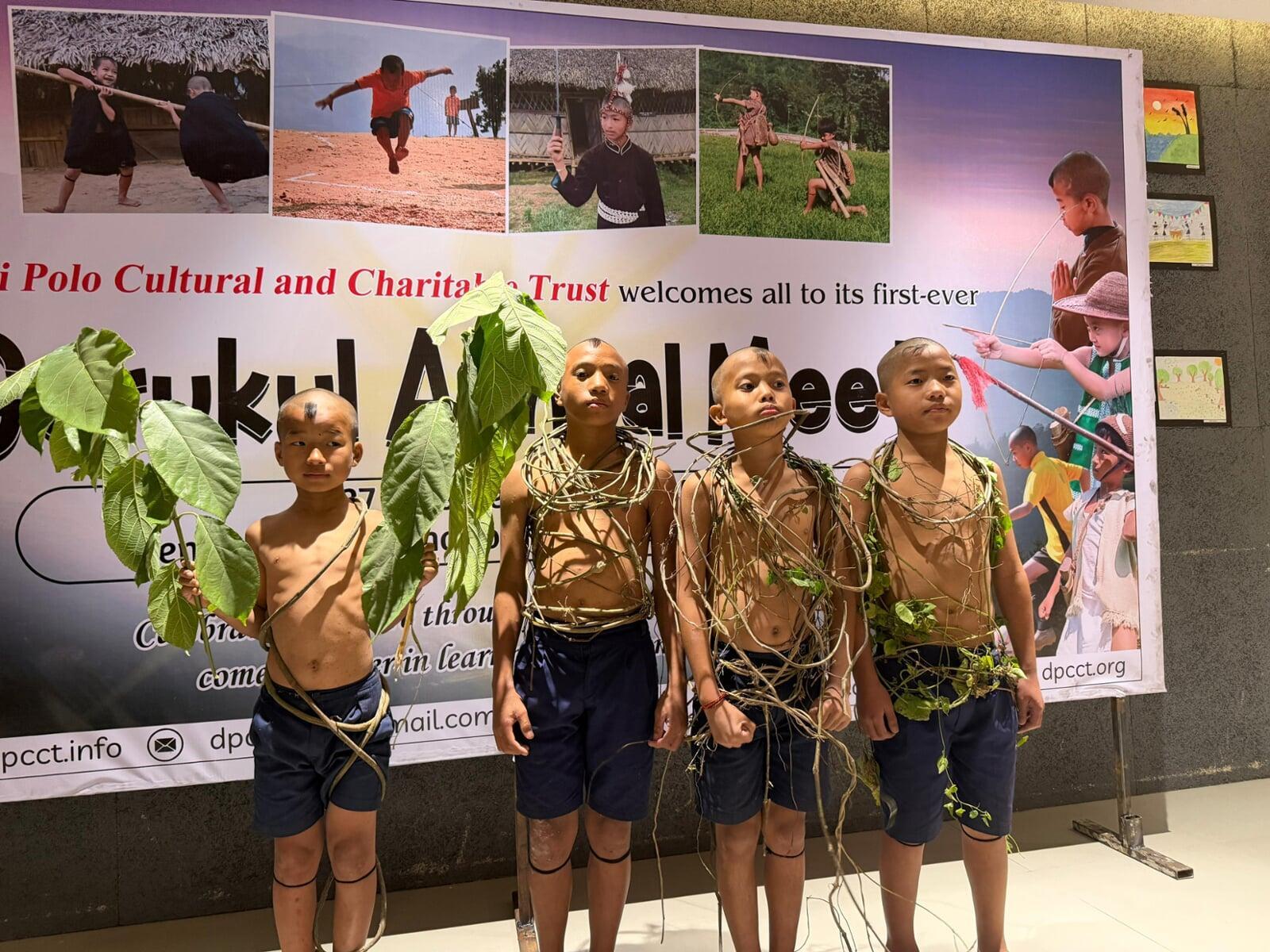
Led by the Principal and the Gurukul’s language teacher, the students were guided through the forest to learn about different types of trees and their medicinal and cultural significance within indigenous communities of Arunachal Pradesh. They were introduced to fruits and leaves that are safe for consumption, along with those known for their healing properties. The children also learnt to construct temporary resting shelters using forest materials such as leaves for roofing, wood for pillars, and large roots used as binding fibres.
As evening approached, they were shown traditional methods of creating fire using stones and bamboo scraps. Later, the students gathered bamboo to prepare local drinking jars, which they filled with clean waterfall water from the forest. Rice was placed inside the bamboo and cooked over the fire, along with a jungle bird that had been hunted earlier in accordance with traditional practices that emphasise sustainability and restraint. Prayers were offered after the hunt, acknowledging respect for nature and balance in its use.
During the night, the Principal well-versed in traditional knowledge introduced students to indigenous terms used for forest elements that are not found in common dialects. The children also shared folk tales and stories around the bonfire. They then gathered to offer thanks to Ane Donyi for their meal and seek protection for the night, after which they had their dinner together before retiring to rest in the shelters they had built.
On the second morning, the students began their day with prayers of gratitude to Ane Donyi, followed by Surya Namaskar to prepare themselves for another day of learning about the forest and its many teachings. As the two-day trek came to an end, they once again prayed to the local deities, thanking them for allowing a peaceful stay before making their way back to the Gurukul—carrying with them lessons drawn from tradition and lived experience.